Can I own a still in California?
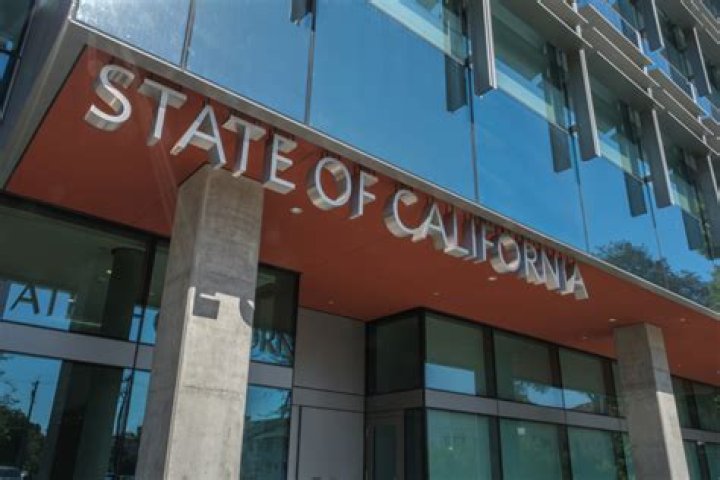
You can own a Still without a permit as long as it's not for Alcohol production for human consumption which would then be illegal. However, if the still is clearly being used for laboratory purposes or to distill water and / or other substances, possessing a still appears to be legal.
Can you distill your own Alcohol in California?
No, it is not legal to distill alcohol in California without a permit. However, several commercial distillers permits are available. Distilling alcohol intended for human consumption, without a permit, is illegal in the State of California. Distilling alcohol for fuel, however, may in fact be legal.Is it legal to own a still in the US?
According to federal law, it is legal to have a still for decoration, distilling water, distilling essential oils, etc. The still does not need to be registered with anyone and no permits are needed as long as it is being used for the aforementioned purposes.Is it legal to make moonshine for personal use?
But federal law trumps state law, and to the feds, distilling at home for personal consumption is illegal, period. "If you distill without permits, you're looking at roughly a dozen felonies," says Tom Hogue, spokesman for the Alcohol and Tobacco Tax and Trade Bureau. "It's not something you want to be doing."Can I distill whiskey at home?
A person may not produce distilled spirits at home for personal use. Except as otherwise provided by law, distilled spirits may only be produced by a distilled spirits plant registered with TTB under the provisions of 26 U.S.C. 5171.Supreme Court expands gun rights; What will this mean for California?
Can you distill at home in California?
Federal Law's on Home Distilling. While individuals of legal drinking age may produce wine or beer at home for personal or family use, Federal law strictly prohibits individuals from producing distilled spirits at home (see 26 United States Code (U.S.C.) 5042(a)(2) and 5053(e)).How much whiskey will a 5 gallon still make?
For the instant gratification seekers in the crowd, here's the short answer: A 1 gallon run will yield 3-6 cups of alcohol. A 5 gallon run will yield 1-2 gallons of alcohol.Can I make my own liquor?
Home Distilling. While individuals of legal drinking age may produce wine or beer at home for personal or family use, Federal law strictly prohibits individuals from producing distilled spirits at home (see 26 United States Code (U.S.C.) 5042(a)(2) and 5053(e)).How much alcohol can you make at home?
Today, federal rules say a household with two adults can brew up to 200 gallons of wine and the same amount of beer each year. (A few states have their own laws prohibiting the practice.) The 1978 law didn't legalize moonshining, though; you still can't brew spirits for private consumption.Can you distill alcohol at home?
Home made spirits and liqueurs are as easy to produce as any other home brewed drink. Using similar equipment to wine making you can produce high quality, high alcohol drinks which are almost indistinguishable from their commercial counterparts and at a fraction of the price.How much is a distillery license in California?
Licensees will be required to pay an application fee of $600 and an annual renewal fee of $300 for the craft distiller's license.What proof is moonshine?
On average, a proof moonshine could range somewhere between 100 to 150 proof. When you convert that alcohol by volume, 150 proof is equivalent to 75% alcohol by volume.Is it legal to make gin at home?
"There's nothing illegal about whipping up a bit of your own homemade gin – and it can be great fun. "Beyond the vodka and the juniper berries, you can feel free to experiment with whatever botanicals you like.Is moonshine still illegal?
The production of moonshine — or really any spirit — without a license is prohibited by the U.S. government and is very much illegal. Although you might see “moonshine” sitting on your local liquor store shelves, it's not exactly the most accurate moniker for a bottled brand.What percent alcohol is moonshine?
Moonshine usually has an ABV of 40% but can sometimes be as high as 60%-80% ABV. Alcohol content can be converted to proof by multiplying it by two. So, 40% ABV is 80-proof. The distilling process is the key to a spirit's alcohol content.What's the easiest alcohol to make?
The easiest alcohol to make is probably mead. Making mead is very straight forward but it is not the fastest alcohol to make. If you want to make alcohol that you can enjoy fast, beer is probably the way to go for you. Wine and spirits generally have longer fermenting processes than beer.Can moonshine make you blind?
If you're drinking moonshine, yes. Although alcohol that's properly manufactured and regulated does not by itself cause blindness, people sometimes do go blind from drinking bootleg beverages. One common concern with moonshine is lead poisoning, which has been linked to blindness.Can you distill wine?
Distillation is used to produce many types of spirits, but in the wine industry, distilled wine can be used to produce brandy and port. Although the base beverage determines the neutrality and flavor of the distilled spirit, distillation can also be used to remediate some wine defects.Why Bacardi 151 was discontinued?
Safety and lawsuitsBecause of its high alcohol content, Bacardi 151 was particularly flammable among liquors. For this reason it was often used as the ignition source for "flaming shots" and even for at-home pyrotechnic stunts.