Hyperdontia is a rare condition that causes too many teeth to grow in a person's mouth. These extra teeth, also called supernumerary teeth, usually grow in the curved areas where teeth are attached to a person's jaw. This area is better known as the dental arches.What does it mean when you have too many teeth?
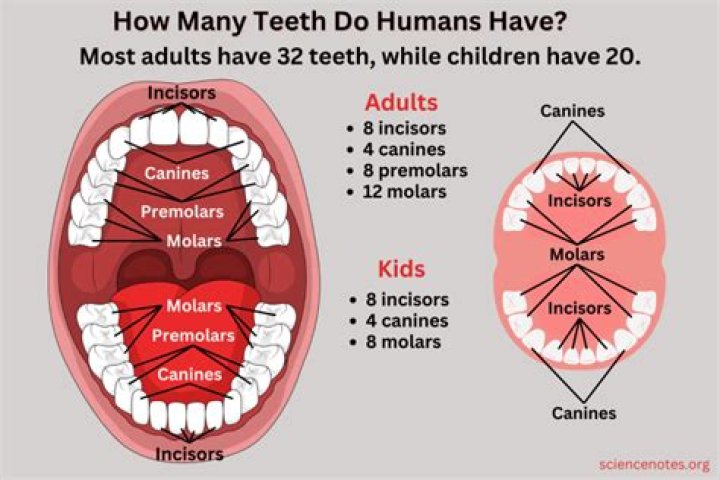
Hyperdontia involves having extra teeth. It is not typically painful, but it can cause complications that lead to pain and swelling. People generally have 20 baby teeth, which grow during childhood, and 32 permanent teeth to replace them.
What causes extra teeth in adults?
Growing extra teeth in adulthood is rare and occurs in roughly 0.15% to 4% of the population. Hyperdontia is often associated with a hereditary disorder, such as Down's syndrome, Gardner's syndrome, or a cleft lip. Curiously, growing new teeth in adulthood is more common in men than in women.
What happens if you have more teeth?
Supernumerary teeth may grow in between teeth or jammed against teeth in the front or rear of the child's baby or permanent teeth. These extra teeth can be situated in a way that causes a failure of permanent teeth to properly erupt from the jaw. Extra teeth can be one of four types of supernumerary teeth.
Is it normal to have 33 teeth?
Adults normally have 32 permanent teeth, while children have 20 baby teeth. Though rare, extra teeth can develop in the mouth—a condition known as hyperdontia; the extra teeth themselves are called supernumerary teeth. These teeth, which occur in .
WHAT ARE THE DIFFERENT TYPES OF TEETH?
Can extra teeth be removed?
If your supernumerary teeth are visible, it may be easy to remove them, just like removing a regular tooth. But if they are covered by something like your gum or by a layer of bone, an oral surgeon will have to lift the gum or remove the bone layer first.
How can I fix my extra teeth?
The primary treatment for hyperdontia is extraction. Prior to extraction, X-rays are often taken to assess supernumerary teeth and determine if they are impacted or erupted. If supernumerary teeth are partially or fully erupted, they may easily be extracted.
Why do I have 36 teeth?
Hyperdontia is the condition of having supernumerary teeth, or teeth that appear in addition to the regular number of teeth (32 in the average adult). They can appear in any area of the dental arch and can affect any dental organ.
Is hyperdontia serious?
Fortunately, hyperdontia is not painful and will not cause serious problems. Your kid might still have pressure and sometimes swelling on their jaw due to the extra teeth in the mouth, jaw, and gums.
What causes double teeth?
There are two causes of this condition: germination and fusion. Gemination occurs when one tooth splits into two, but they remain attached to each other and develop together. If the geminated teeth are counted as one tooth, there are a normal number of teeth.
Should I worry about hyperdontia?
The good news is that hyperdontia can't cause serious problems and it's usually not too painful. Nonetheless, the extra teeth in the mouth can put pressure on a patient's jaw and gums, thus causing them to swell.
Why do I have 5 wisdom teeth?
Wisdom teeth do not grow back after they've been removed. It is possible, however, for someone to have more than the typical four wisdom teeth. These extra teeth, which can erupt after your original wisdom teeth have been extracted, are called supernumerary teeth.
Why do I have 6 wisdom teeth?
Wisdom teeth do not grow back after they are removed. However, it is possible for a person to have more than four wisdom teeth. These extra teeth are called “supernumerary” teeth and can occur anywhere in the mouth.
Is it normal to have 31 teeth?
A full set of adult teeth will amount to 32 teeth in total. This includes the wisdom teeth, which grow in at the back of the mouth. These normally grow in much later and can be expected between the ages of 17 and 21. For some people wisdom teeth don't grow in at all.
Why do I have teeth growing at the back of my mouth?
Wisdom teeth grow in at the back of the mouth, behind your molars. There is a set on the bottom as well as the top. Wisdom teeth often grow in crooked, sideways, or otherwise misaligned. As they grow in, they can push on other teeth, causing problems of overcrowding and misalignment for them as well.
Is it rare to have 32 teeth?
A very few people have more than 32 teeth but this is considered an anomaly. In general, probably over decades of evolutionary time, our jaws have gotten smaller so that there is not enough room for the full compliment of 32 teeth.
Has anyone had 3 sets of teeth?
At the age of 5, my son Jayan had a routine set of dental X-rays that showed a disturbing fact. The X-rays revealed that he possessed not one, not two, but three sets of front teeth. There were his baby teeth, his permanent teeth and in between, an extra set.
Can you get braces with hyperdontia?
For patients with hyperdontia, orthodontic treatment often paired with extractions may be necessary. An oral surgeon can remove the extra tooth or teeth and then an orthodontist can align the bite to create a harmonious and healthy smile. Some patients may not require extraction and only need orthodontic treatment.
Is extra teeth genetic?
Presence of multiple supernumerary teeth is thought to have genetic component. We report a rare case where multiple supernumerary teeth were seen without presence of any other syndrome in 3 generations; father, son, and two grandsons.
Who has the most teeth in the world?
Vijay Kumar from India has 37 teeth in his mouth – five more than the average person and, crucially, more than anyone else in the world.
What is it called when you have extra teeth?
A mesiodens tooth is an extra (also known as supernumerary) tooth that grows in some children's mouths. This additional tooth most often appears between the top two front teeth and can disrupt your child's bite alignment and the growth of surrounding teeth.
Should supernumerary teeth be removed?
Do Supernumerary Teeth Need to Be Removed? When supernumerary teeth cause clinical complications, extraction is typically recommended.
Is hyperdontia hereditary?
Hyperdontia is often occasional, but hereditary factors can also be involved, especially in the most serious cases, otherwise it can be associated to genetic syndromes such as “Gardner Syndrome” or “Cleidocranial Dysplasia”; in these syndromic forms, hyperdontia is a sign of a clinical picture which is definitely more ...
Can extra teeth cause headaches?
Your third molars, or wisdom teeth, can cause discomfort, including headaches, when they're moving up through your jawbone and emerging from your gum line. Dental decay or oral surgery to remove impacted wisdom teeth can also cause postoperative headaches.